Heat Pump Installation in Knighton, Leicester
MCS-certified air source heat pump installation across Knighton's 1930s semi-detached streets, the post-war estates of West and South Knighton, and the village core. £7,500 BUS grant supported. Free survey and written quote.
Last reviewed: 21 May 2026
-
£7,500 BUS grant
available toward an MCS-certified heat pump installation in Knighton. Statutory figure — gov.uk Boiler Upgrade Scheme.
-
MCS-certified installation
is required for the BUS grant and to protect manufacturer warranty terms. Every installer in our network is MCS-certified.
-
~3–4× the efficiency of a gas boiler
in typical UK conditions, measured by SCOP across a full heating season. Leicester's design winter temperature is around −3.6°C.
Heat pumps in Knighton — the local context
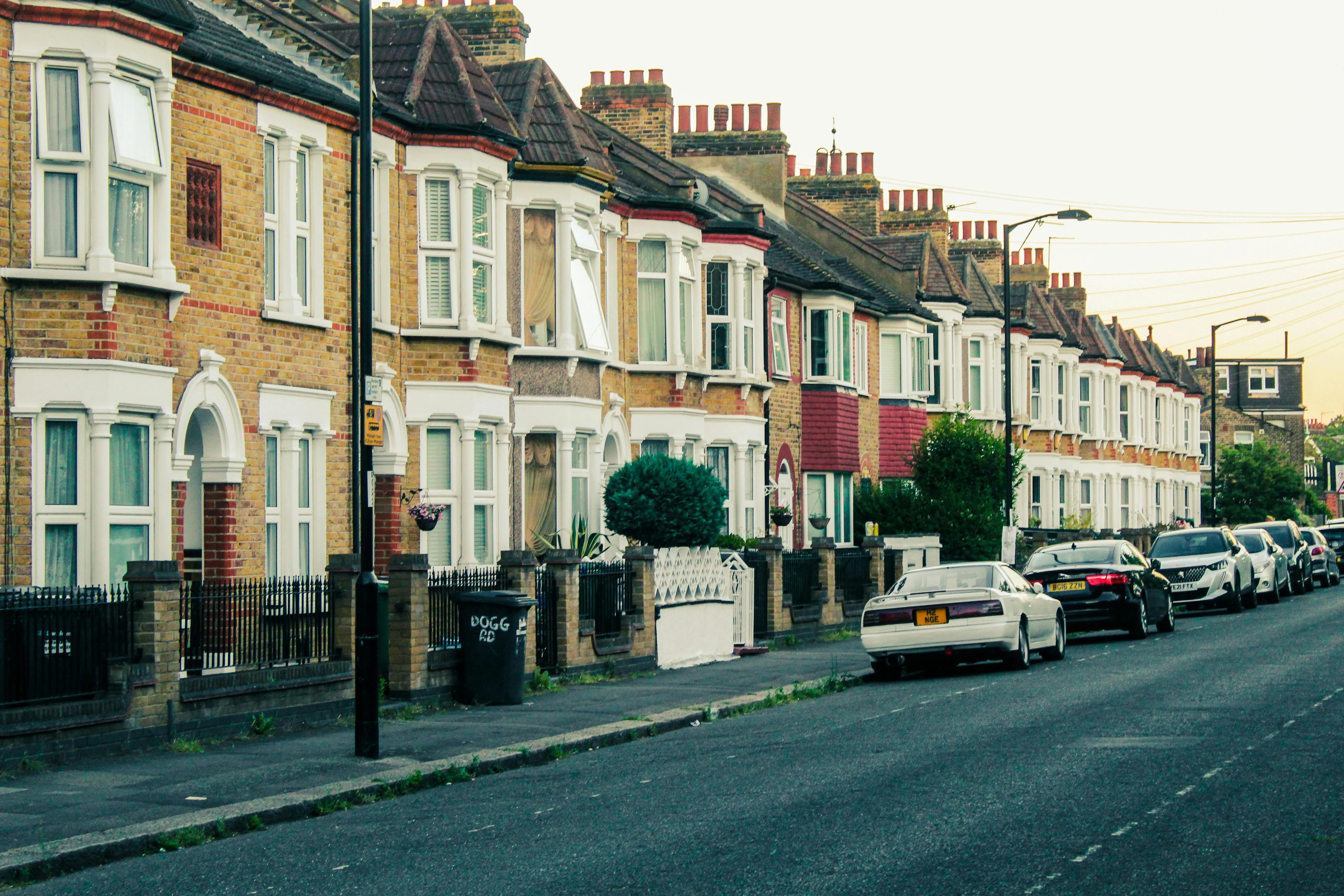
Knighton was an agricultural village in the Domesday Book (1086), absorbed into Leicester through Victorian expansion via neighbouring Stoneygate and Clarendon Park. The defining housing-stock era is much later than its medieval roots suggest: the area's character is overwhelmingly 1930s–1940s red-brick semi-detached, the product of interwar speculative building. Further suburban growth followed in the 1950s–1970s through the West and South Knighton estates, adding post-war semi-detached and detached housing in the mix. The rough breakdown is 15% Victorian or Edwardian (the village core and the streets that linked the old village to inner Leicester), 60% 1930s–1940s semis, and 25% post-war 1950s–1980s estate stock.
Knighton has no standalone Conservation Area. Leicester City Council's published register of 25 conservation areas does not include a Knighton CA, despite the historic village core anchored by St Mary Magdalen Church (at least 13th century) at the heart of the 20th-century suburb. That absence is positive news for most Knighton heat pump installations: Permitted Development rights apply across the great majority of the area, the 1.5 m³ outdoor unit threshold is rarely a constraint on cavity-wall semi-detached plots, and the planning timeline is whatever the installer's standard PD compliance check requires. Listed-building consent applies only to individually listed properties — the church itself and a small number of adjacent older properties.
The 1930s–1940s semi is the area's defining heat pump profile. Cavity-wall construction (standard from the late 1920s onwards) means the property's heat-loss profile is workable without solid-wall insulation, the typical layout (front and rear gardens, side passage on one elevation) gives plenty of siting options away from the streetscape, and the 7–9 kW heat-loss-calculated system size is at the volume end of UK heat pump manufacturing — meaning shorter hardware lead times and the broadest installer competence. Standard R32 monobloc heat pumps work well at the lower flow temperatures these properties can achieve with modestly-upgraded radiators.
West and South Knighton estate stock (1950s–1970s post-war semi-detached and detached) is similar in retrofit shape to the 1930s semis but tends to have slightly more compact plots and occasionally pre-existing electrical capacity adequate for the heat pump without a consumer-unit upgrade. The estate streets are routine work: heat-loss survey, sizing, brand choice, outdoor unit siting, commissioning. The post-war stock typically lands at the lower end of the Knighton cost range.
The village core around St Mary Magdalen Church is a different conversation. The streets immediately around the church carry some pre-1900 stock alongside the dominant 1930s expansion, and that older stock occasionally falls under listed-building consent — the church itself is listed, and some adjoining properties may be too. Solid-wall pre-Victorian properties in the village core need the same design approach as the wider Stoneygate-Clarendon Park Victorian stock: R290 heat pump for higher flow temperatures, wider radiator-upgrade scope, and consideration of fabric improvements alongside. The village core is a small fraction of Knighton's housing footprint, so this is the exception rather than the rule.
Knighton Park (78 acres, established 1953, Green Flag Award holder from 2005) is the neighbourhood's central public amenity. Properties bordering the park benefit from the open outlook on one elevation, which often gives more siting flexibility for the outdoor unit — and there's no separate planning regime for property near the park, no CA boundary, and no listed-buildings concentration to manage. Standard PD rules and MCS 020(a) noise standard apply.
For most Knighton homeowners, the heat pump installation path is short and routine: free survey, a 7–9 kW R32 monobloc heat pump sized to the building, two to four radiator upgrades on the rooms with the largest exposed wall area, MCS-certified installation under standard PD, BUS grant applied by the installer on your behalf, and commissioning. Three to six days on site, no conservation-area design overhead.
Heat pump services for Knighton
Semis with side access and back gardens make siting simple, and much of Knighton is outside conservation areas. Our service pages explain each stage, and an enquiry through this site goes to one local installer from our network.
Paying for a heat pump in Knighton
If your household income is under £36,000 and your home is rated EPC D to G, Leicester City Council's Warm Homes: Local Grant may pay for a heat pump or insulation in full.
Otherwise, the Boiler Upgrade Scheme takes £7,500 off for any homeowner or private landlord, with no income test. Nearly all Knighton homes are on mains gas, so the £7,500 grant is the relevant one. Details on our costs and grants page.
Estimated cost in Knighton
Knighton heat pump installations typically run £8,000–£12,000 before the £7,500 BUS grant — net £500–£4,500. That puts Knighton in the middle of the Leicester range, and the dominant 1930s–1940s semi-detached stock keeps the figures relatively tight.
1930s–1940s semi-detached profile. The defining Knighton housing type — cavity-wall construction (standard from the late 1920s onwards), front and rear gardens, side passage on one elevation — is one of the easier UK retrofit profiles. A 7–9 kW R32 monobloc heat pump is the routine specification, sitting at £8,000–£10,000 gross with two to four radiator upgrades. West Knighton and South Knighton post-war estate stock (1950s–1970s) land in similar territory, sometimes with pre-existing electrical capacity adequate without a consumer-unit upgrade.
Village-core exception around St Mary Magdalen. The small pre-1900 fraction in the medieval village core anchored by St Mary Magdalen Church (at least 13th century, the church itself listed) carries the older retrofit shape — solid-wall heat-loss profile, R290 heat pump for higher flow temperatures, wider radiator-upgrade scope. These properties land at £11,000–£12,500 gross. Listed-building consent applies on any adjoining listed property.
Permitted Development simplicity. With no standalone Knighton Conservation Area on Leicester City Council's register, the great majority of properties run straight through standard PD — no CA planning fees, no conservation-officer consultation, no listed-building concentration on the typical semi. The cost picture stays clean: hardware, radiator upgrades where the heat-loss calc identifies them, hot water cylinder where the existing cylinder isn't sized for heat pump duty (less common than on substantial period property — many Knighton semis have a workable indirect cylinder in the airing cupboard).
After grant, the typical net Knighton installation sits £500–£4,500 — comparable to or only modestly higher than a like-for-like gas boiler replacement (£2,500–£4,500). Heat pump lifespan (15–20 years vs 10–15 for gas) and the gas-versus-electricity price trajectory close the gap further over the long run. Request a quote for a property-specific comparison; the 2026 heat pump cost guide breaks down the cost drivers.
Finding a good installer in Knighton
Check the company on the MCS register: without certification there's no grant. Be wary of cold calls offering free heat pumps; genuine free schemes run through the council.
Planning questions for Knighton go to Leicester City Council. See finding a trustworthy installer and how we select installers.
Heat pump installation in Knighton — FAQ
How long does heat pump installation take in Knighton?
Most installations take three to five days at your home, after the survey and quote. A Knighton semi is usually done in three to four days.
Do I need planning permission for a heat pump in Knighton?
Most Knighton installations fall under Permitted Development and don't need planning permission. Knighton has no standalone Conservation Area — Leicester City Council's published 25-CA register confirms this, despite the historic village core anchored by St Mary Magdalen Church. PD rules apply: the 1.5 m³ outdoor unit volume threshold, the MCS 020(a) noise standard at 37 dB LAeq,5min at the nearest residential window, and the standard siting clearances from doors and boundaries. Listed buildings (if your specific property carries a Grade II or higher listing) always need listed-building consent for external installations regardless of PD; the survey identifies this on a per-property basis.
Are heat pumps suitable for 1930s semi-detached houses in Knighton?
Yes — the 1930s–1940s red-brick semi is one of the easier UK housing types to retrofit with a heat pump. Cavity-wall construction (standard from the late 1920s onwards) means the property's heat-loss profile is workable without solid-wall insulation, and the typical layout — front and rear gardens, side passage on one elevation — gives plenty of outdoor unit siting options away from the streetscape and away from a neighbour's boundary. Standard R32 monobloc heat pumps work well at the lower flow temperatures these properties can achieve with modestly-upgraded radiators. Knighton's 60-percent-plus share of 1930s–1940s semis means this is the most common installation profile in the area.
Am I eligible for the £7,500 BUS grant in Knighton?
Most homeowners and private landlords are. The grant is £7,500 with no income test. Lower-income households may qualify for free Warm Homes funding instead.
How much does heat pump installation cost in Knighton?
Roughly £8,000–£12,000 before the grant and £500–£4,500 after it. Radiators, the cylinder and any microbore pipework make the biggest difference.
Will I need new radiators with a heat pump in a Knighton home?
Some, most likely. With filled cavities, one to three radiator upgrades is typical. Larger radiators let the heat pump run at a lower, more efficient temperature.
What's the heat pump story in the village core near St Mary Magdalen?
St Mary Magdalen Church anchors Knighton's medieval village core — the church's origins go back at least to the 13th century. The streets immediately around the church carry some pre-1900 stock alongside the dominant 1930s expansion, and that older stock occasionally falls under listed-building consent (the church itself is listed; some adjoining properties may be too). Solid-wall pre-Victorian properties in the village core need the same design approach as the wider Stoneygate-Clarendon Park Victorian stock: R290 heat pump for higher flow temperatures, wider radiator-upgrade scope, and consideration of fabric improvements alongside. The village core is a small fraction of Knighton's housing footprint — most of the area is the wider 20th-century suburb.
How does Knighton Park affect heat pump installations nearby?
Knighton Park (78 acres, established 1953, Green Flag Award holder from 2005) is the neighbourhood's central public amenity and doesn't directly constrain heat pump installations on adjacent streets. There's no separate planning regime for property near the park, no CA boundary, and no listed-buildings concentration to manage. Properties bordering the park benefit from the open outlook on one elevation, which often gives more siting flexibility for the outdoor unit. The standard PD rules and MCS 020(a) noise standard apply.
Get a Knighton heat pump quote
Submit the form on the homepage with your LE2 postcode and a note about your property. We'll route the enquiry to an installer in our network whose coverage of Knighton and brand portfolio fit. The survey is free; the written quote shows the actual figure you'd pay after the £7,500 BUS grant has been deducted, with any required radiator upgrades or hot water cylinder costs included.